Venturi-KGEI power systems deliver fuel-free baseload electricity with no fuel cost, minimal infrastructure, and very low maintenance, dramatically reducing lifecycle energy costs compared to all competing technologies.
The following analysis demonstrates KGEI’s superior positioning across four critical evaluation dimensions: deployment timeline, infrastructure complexity, land usage, and lifetime cost of energy.
| Technology | Fuel | Deployment | Infrastructure | Energy Cost |
|---|---|---|---|---|
| Gas Engine | Natural Gas | 18–36 months | Pipeline needed | High |
| Solar | None | 12–24 months | Large land area | Medium |
| Geothermal | None | 5–10 years | Drilling infrastructure | Medium-Low |
| Gas Turbine | Natural Gas | 24–48 months | Complex fuel systems | High |
| Venturi-KGEI | None | 6–12 months | Minimal infrastructure | Very Low ($0.04–0.07) |
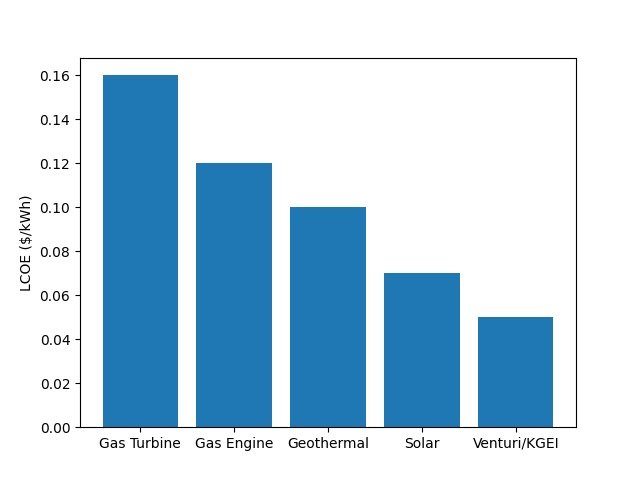
KGEI delivers a levelized cost of energy of just $0.04–$0.07 per kWh – competitive with solar and significantly lower than gas or geothermal. This cost advantage comes from zero fuel expenses, minimal maintenance, and 30‑50 year system life. While gas turbines face volatile fuel markets and solar requires expensive storage, KGEI provides stable, predictable electricity pricing for the duration of 25‑30 year Power Purchase Agreements.
Lower LCOE means more affordable electricity over the plant’s lifetime.
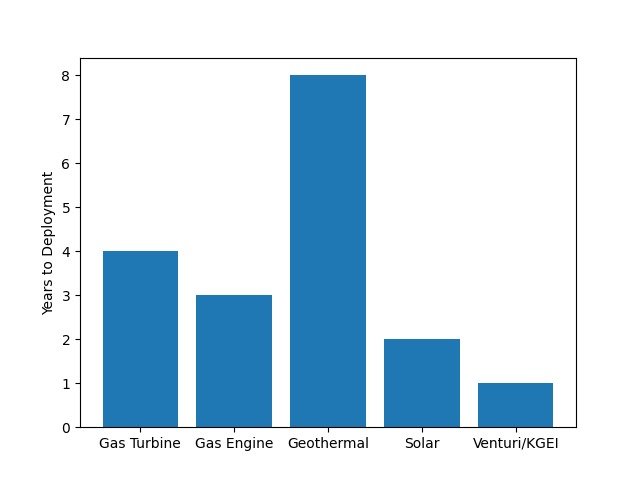
Conventional power plants take 3 to 10 years from planning to operation – delayed by fuel infrastructure, drilling, or land acquisition. KGEI systems deploy in just 6‑12 months because they arrive as pre‑assembled containerized modules requiring minimal site preparation. For governments and industries facing urgent power needs, this speed difference is transformational.
Faster deployment means quicker revenue and faster grid stability.
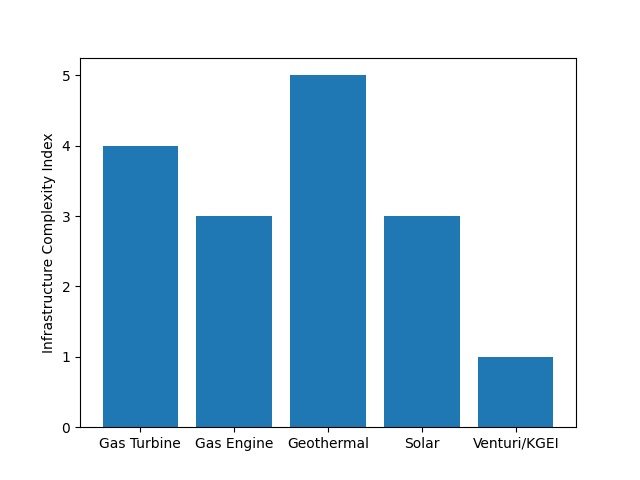
Geothermal projects require deep drilling and steam gathering systems (complexity score: 5). Gas turbines need pipelines, storage tanks, and cooling water infrastructure (score: 4). KGEI systems score just 1 – they arrive as complete containers, connect to existing switchgear, and begin generating. No fuel supply chains, no cooling towers, no complex permitting across multiple agencies.
Lower complexity means fewer delays, fewer contractors, and fewer things to go wrong.
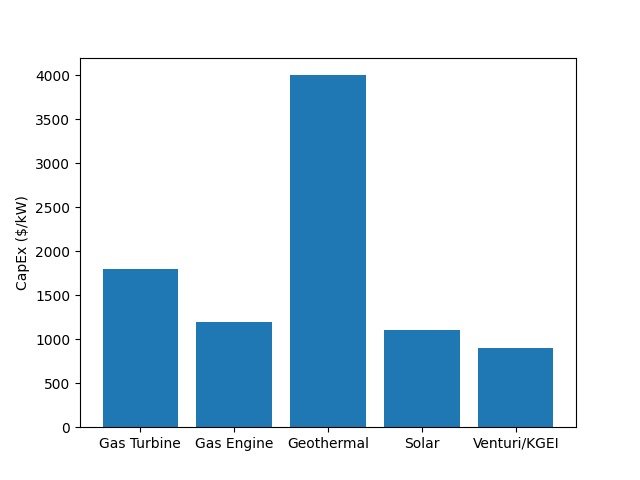
At an estimated $2M–$2.6M per MW ($2000–$2600/kW) , KGEI’s capital cost is comparable to gas engines and lower than geothermal. But the real economic story is total cost of ownership: with zero fuel cost and very low maintenance, KGEI systems achieve the lowest LCOE of any baseload technology. The modest upfront investment is further reduced through PPA structures that require zero capital from the client.
Competitive upfront cost with dramatically lower lifetime costs.
KGEI develops large‑scale energy projects backed by 25–30 year Power Purchase Agreements (PPAs). With predictable revenue streams, very low operational costs, and zero fuel price risk, our projects offer institutional‑grade returns in the rapidly expanding global energy market.